Heat Resilience
What is Extreme Heat?
Extreme heat happens when temperatures and humidity combine to create dangerously high “felt” temperatures (the heat index) for prolonged periods. It strains the body’s ability to cool itself, increases energy demand, and elevates risks of heat-related illness—especially when hot daytime conditions are followed by warm nights that offer little relief. In recent years, communities nationwide have recognized extreme heat as a leading climate-related health risk, outpacing other hazards in its toll on public health and everyday life.
Extreme Heat in South Florida
South Florida’s climate brings high humidity, frequent heat advisories, and warmer nights, which can exacerbate urban “heat island” effects (hotter conditions in paved, low‑shade areas). Peak heat often overlaps with hurricane season and outdoor work schedules, increasing exposure. Reducing heat risks here means adding shade, expanding tree canopy, improving building and street design, and ensuring people have trusted, accessible places to cool down and get information during heat waves.
Who is Vulnerable?
Anyone can be affected by extreme heat, but some neighbors face higher risk:
- Older adults, young children, and people with chronic conditions (e.g., heart or respiratory disease).
- Outdoor workers (construction, landscaping, utilities, delivery) and athletes or recreation staff with prolonged sun exposure.
- Residents without reliable air conditioning, those in lower‑income households, and unhoused individuals.
- Neighborhoods with limited tree canopy or lots of dark, heat‑absorbing surfaces (asphalt, concrete). Boynton Beach’s canopy work prioritizes areas with higher heat vulnerability and historically underserved communities.
What is Boynton Beach Doing?
We’re building a comprehensive, community‑centered approach to keep Boynton Beach resident safer, cooler, and better informed during heat waves.
Urban Tree Canopy Assessment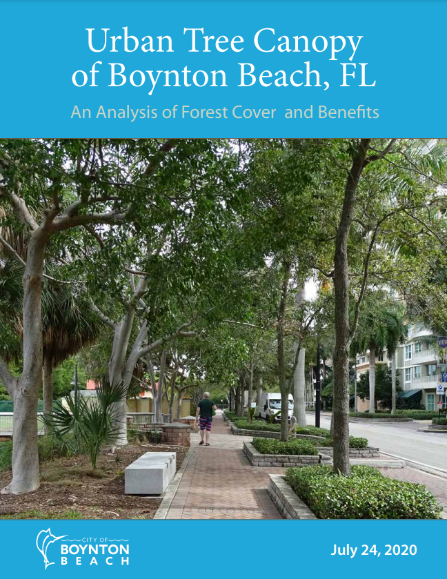

We completed a Tree Canopy Assessment (Green Infrastructure Center, 2020) and a citywide tree inventory (PlanIT Geo, 2022) to understand where shade is lacking and where strategic planting will have the greatest cooling and health benefits.
To guide implementation, our Urban Tree Canopy Improvement Guidelines focus on “Right Tree, Right Place,” storm‑resilient species, and diversity targets (the 30‑20‑10 rule: no more than 30% from one family, 20% from one genus, 10% from one species). These principles help reduce heat islands, improve air quality, and support equitable shade where it’s needed most.
Urban Heat Resilience Strategy: Climate Smart Communities Initiative

The City, in partnership with ICLEI USA and Community Greening, was awarded the Climate Smart Communities Initiative (CSCI) Grant to advance community-led heat resilience planning. The project team was awarded $100,000 to build the City's first Urban Heat Resilience Strategy. This support will help accelerate Boynton Beach’s urban canopy and heat resilience work in collaboration with local partners.

Thriving Earth Exchange
Boynton Beach is collaborating with AGU’s Thriving Earth Exchange (TEX)—a community-science program that pairs local challenges with volunteer scientists and a Community Science Fellow at no cost. Our TEX project is helping identify optimal locations for resilience hubs to support our Urban Heat Resilience Strategy, with ongoing planning meetings and community coordination. Learn more here: Hot Zones: implementing Resilience Hubs to Combat Extreme Heat in Boynton Beach.
How You Can Help (Community Tips)
- Stay informed: Follow city channels for heat advisories and guidance during heat events. (More local alert links coming soon.)
- Use shade and cool spaces: Seek trees, parks, libraries, and other public facilities during peak heat; limit outdoor activity in mid‑afternoon.
- Check on neighbors: Older adults and those without AC may need assistance.
- Hydrate and protect: Drink water frequently; wear light, breathable clothing and sun protection.
- Plant and care for trees: Support tree programs, right‑of‑way plantings, and neighborhood greening to cool streets and homes over time

Resources
National Weather Service Miami's Heat Forecast Page
FEMA's Extreme Heat Preparedness Website
National Integrated Heat Health Information System
American Red Cross: Extreme Heat Safety


